Homerun is pioneering new innovative techniques to facilitate advanced materials for global demand through relentless research and development initiatives
Zero Waste Silica Purification and Targeted Material Development
Zero Waste Silica Purification
Targeted Material Development
Silica Purification
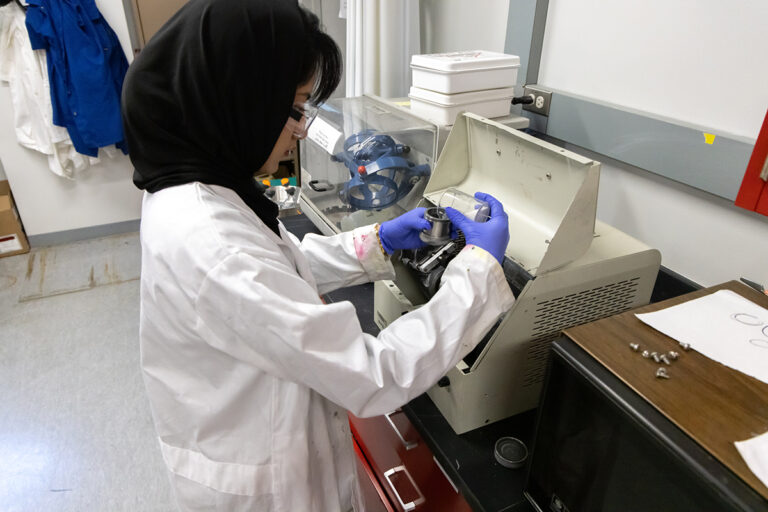
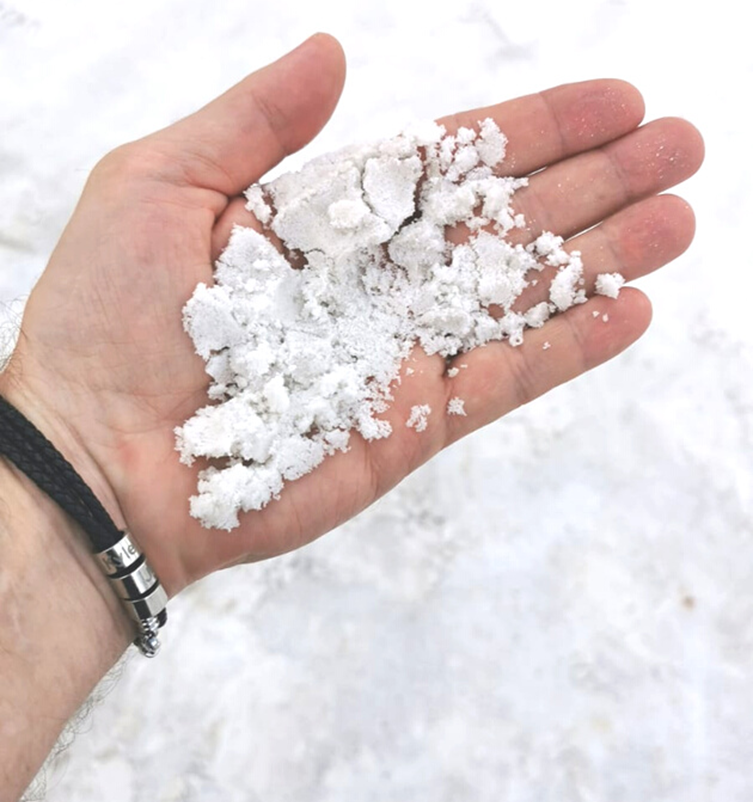
UC Davis successfully purified RAW silica sand from Homerun’s Santa Maria Eterna deposit to +99.99% Si02 using a Femtosecond laser with no chemical reagents.
Thermoelectric processing to ultra-high purity silica, silicon and silicon carbide. UC Davis successfully synthesized silicon carbide with proprietary methods.
Carbide-based refractories and oxycarbide glasses, creating combined material solutions utilizing high purity silica and graphite.
UC Davis, Homerun Resources Innovate Carbon-Neutral Path with Laser-Purified Silica
In collaboration with Homerun, researchers at UC Davis have developed a femtosecond thermal laser processing method to purify raw silica sand to a level of 99.999% purity. The single step thermal method uses a femtosecond laser that involves subtle structural and optical phenomena controlled by multiple process parameters. Skillful variation of these conditions produces various topographical features (such as cones and ripples) and microstructural changes (including recombination, oxidation, and amorphization) which depend on specific laser parameters like number and intensity of pulses. The prospect of further adaptation and development of the treatment variables is a vast area of research and major proprietary product development theme.
From Grains of Sand
Subhash H. Risbud, Distinguished Professor, Department of Materials Science and Engineering at the University of California, Davis, stated, “These very exciting results from the current research work with Homerun, have revealed for the first time how a single step laser process can convert raw impure sand samples in as little as two hours to a silica purity level of 99.999%. The thermal laser process used not only avoids the use of hazardous chemicals but also eliminates the need for energy-intensive machinery typically used in mechanical and chemical purification. This laser process is notable for its versatility as the production demands of new semiconductor chip substrates transition from conventional silicon to SiC and other wider bandgap materials. The foundation for these technologies-on-the-horizon are economically produced powders of ultra-pure silica convertible to Silicon, Silicon carbide, Si-nitride and Oxynitrides and Oxycarbides. The broad range of applications of these new materials will make a dramatic impact on the business world of products based on electronic and photonic chips, battery anodes, solar cells, glass and high temperature refractories for steel and metal alloys.”
HOMERUN RARE EARTH ELEMENT (REE) SEPARATION TECHNOLOGY PARTNERSHIP
On October 29th, Homerun announced that it has executed a binding Memorandum of Understanding with Magnum Mining & Exploration Limited, to jointly evaluate the application of Homerun’s ultra-pure silica sand for the adsorption and chromatographic separation of rare earth elements samples supplied by Magnum.
HIGHLIGHTS
High-purity silica
Homerun and Magnum will evaluate the use of Homerun’s high-purity silica as potential column media for ion-exchange chromatography, as reported in scientific literature for REE separation.
Ion-exchange
The program of works to be undertaken will aim to determine whether Homerun’s high-purity materials can be optimised for ion-exchange or chromatographic separation of REEs from ore samples sourced from Magnum’s Brazilian REE projects.
PEER REVIEWED STUDIES
Recent peer-reviewed studies report bench-scale continuous extraction chromatography on silica-based media achieving ≥99.9% purity for individual Heavy REEs using mineral-acid elements, indicating potential process and environmental advantages versus conventional bulk solvent extraction

 English
  Portuguese